$49.33 Million Settlement Reached in Starvation Death of Autistic Vancouver Child – Read More

$49.33 Million Settlement Reached in Starvation Death of Autistic Vancouver Child – Read More
Get Help Now!
After a car accident or personal injury case in Washington, many people are surprised to learn that their own insurance company may request money back from their settlement. This process is called subrogation. Understanding subrogation in Washington is critical because it can significantly affect how much compensation you ultimately receive after a car accident.
Subrogation refers to the legal right of an insurance company or government entity that paid expenses on your behalf to seek reimbursement from the party responsible for the accident. For example, if your health insurance or Personal Injury Protection (PIP) coverage pays your medical bills after a car accident, the insurer may later request reimbursement from the at-fault driver’s insurance company once your claim is resolved.
In simple terms, your insurance initially pays your bills so you can receive treatment and then attempts to recover those costs after settlement funds are available.
The subrogation process after a car accident typically follows these steps:
In some cases, medical providers can also assert claims through medical liens, which are related but slightly different from subrogation.
While both involve reimbursement after settlement, they happen in different ways. A medical lien typically occurs when a healthcare provider agrees to treat an injured person and wait for payment until the personal injury case is resolved. The provider then places a claim on the future settlement funds.
Subrogation, on the other hand, occurs when an insurance company has already paid medical bills and accident-related costs and later seeks reimbursement after the injured person recovers compensation from the responsible party.
Yes. Because insurance companies may seek reimbursement, subrogation can reduce the amount of money you receive from a personal injury settlement. However, Washington law provides important protections for car accident victims that can limit how much an insurance company is allowed to recover.
Additionally, subrogation claims are often negotiable. In many cases, Davis Law Group works directly with insurers to reduce reimbursement claims so injured clients can keep more of their settlement.
The Made Whole Doctrine is a legal principle that protects accident victims when insurance companies seek reimbursement.
Under this rule, an insurance company generally cannot recover subrogation funds until the injured person has been fully compensated for their losses. Being “made whole” typically includes compensation for damages such as:
If a settlement does not fully cover these losses, the insurer’s subrogation claim may be reduced or eliminated.
This situation is common when the at-fault driver has limited insurance coverage or when the total damage exceeds the available settlement funds. In these cases, subrogation claims may be negotiated down or removed entirely so the injured person receives a fair recovery.
In Washington, subrogation after a car accident can involve several different types of insurance. Health insurance providers, PIP carriers, and even government programs like Medicaid or Medicare may assert subrogation rights against your settlement. Each type of claim is subject to different rules and limitations under Washington law, which is why working with an experienced subrogation attorney is essential to protecting your recovery.
Subrogation claims should never be ignored. If they are left unresolved, insurance companies may pursue reimbursement through legal action or collections. Unresolved claims can also delay the distribution of your settlement funds. In some cases, settlement money can be withheld until all reimbursement claims are resolved.
If you have questions about subrogation in Washington after a car accident or personal injury, the experienced subrogation lawyers at Davis Law Group can review your situation and protect your recovery. Contact us today at (206) 727-4000 to schedule a free consultation and let us put our experience to work for you.
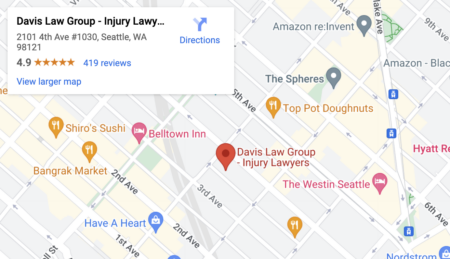
2101 4th Ave #1030,
Seattle, WA 98121
Phone: 206-727-4000
Office Hours:
24 hours/day. 7 days/week.
Phone:
Contact Us
Complete this CONFIDENTIAL form or call 206-727-4000 for a FREE consultation.