$49.33 Million Settlement Reached in Starvation Death of Autistic Vancouver Child – Read More

$49.33 Million Settlement Reached in Starvation Death of Autistic Vancouver Child – Read More
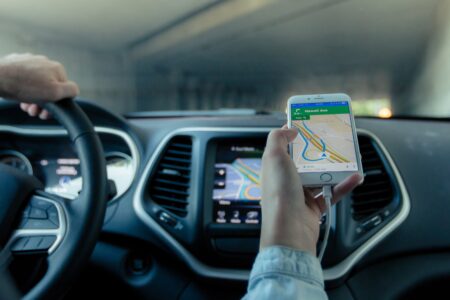 Rideshare companies have fundamentally changed how Americans get around. In the Seattle metro area alone, tens of thousands of rides are completed every day. These companies have built their brands on a simple promise: open an app, request a ride, and arrive safely at your destination.
But that promise is breaking down. A growing body of investigative reporting, federal lawsuits, and legislative battles is revealing that rideshare companies have operated largely unchecked — cutting corners on driver screening, lobbying to reduce the insurance coverage that protects passengers, and hiding behind a corporate structure designed to make accountability disappear when rideshare accidents happen.
For anyone in Washington who uses these apps, or who shares the road with rideshare drivers as a pedestrian, cyclist, or motorist, the reality behind the convenience matters. Here is what rideshare companies don’t want you to know — and what you can do to protect yourself.
In February 2026, a major investigation found that one of America’s largest rideshare companies had approved drivers convicted of child abuse, stalking, and assault in at least 22 states — as long as those convictions were more than seven years old. The same investigation revealed that the company received reports of sexual assault or misconduct on average every eight minutes between 2017 and 2022. In many cases, drivers were allowed to continue operating after complaints were filed until the company determined the allegations were “serious.”
The companies have announced policy changes, but with no public timeline for implementation. The broader issue is that rideshare companies have consistently treated driver screening as a cost to be minimized rather than a safety obligation to be fulfilled. Background check processes have been inadequate from the start, and passengers, pedestrians, and other motorists have paid the price.
For people in Washington State who rely on these apps daily, the question is direct: who checked the person driving toward you right now?
While rideshare companies publicly promise safety, their legislative lobbying tells a different story.
In California, rideshare companies successfully lobbied for Senate Bill 371, which cut uninsured/underinsured motorist (UM/UIM) coverage for passengers from $1 million per person to just $60,000 per person — a 94 percent reduction. To put that in perspective, a single emergency surgery or a few days in the ICU after a serious rideshare accident can easily exceed $60,000 in medical costs alone.
The same companies are backing ballot initiatives to cap personal injury attorney fees, which consumer advocates describe as a direct attack on accident victims’ ability to find qualified legal representation. If your potential recovery is capped and your attorney’s fees are limited, fewer experienced lawyers will take complex rideshare accident cases — which is precisely the point.
This legislative model is designed to spread state by state. These are billion-dollar companies with enormous lobbying budgets. If the playbook worked in California, there is every reason to believe they will bring the same approach to Washington and other states. The insurance protections Washington residents currently assume are in place may not last.
When a rideshare driver causes a serious accident, the company behind the app has a well-practiced response: “We’re a technology platform, not a transportation company.” The driver, they argue, is an independent contractor — not an employee.
This is not a technicality. It is a deliberate legal strategy designed to distance rideshare companies from the liability that comes with putting drivers on the road. They collect a percentage of every fare. They set the prices. They determine which drivers are activated and deactivated. But when one of their drivers causes a catastrophic rideshare accident, the corporate structure is engineered so that every entity points somewhere else.
The result is that victims of rideshare accidents often face a maze of deflection: the company points to the driver, the driver’s personal insurance may not cover commercial activity, and the company’s commercial policy has coverage “periods” that depend on the exact status of the app at the time of the crash. There are gaps at every turn, and accident victims fall through them.
This accountability gap is not accidental. Rideshare companies have spent years and billions of dollars constructing a corporate framework that allows them to profit from every ride while distancing themselves from the consequences when something goes wrong. They set the fares, they control the algorithm that matches riders with drivers, and they take a percentage of every transaction. By any functional measure, they operate as transportation companies. But when a rideshare accident results in catastrophic injury or death, the first words out of their legal department are: we are just an app.
This is why rideshare accident cases require attorneys who understand the corporate structure and know how to cut through the deflection. Holding a rideshare company accountable is not impossible — but it requires a level of investigation and litigation readiness that many firms are not prepared to provide.
One of the reasons rideshare accidents are so legally complex is the layered insurance structure. Unlike a standard car accident where one driver’s policy covers the claim, rideshare accidents involve multiple potential layers of coverage that shift depending on what the driver was doing at the time of the crash.
Period 1 — App is off. The driver’s personal auto insurance applies. The rideshare company provides no coverage. However, many personal auto policies exclude commercial driving activity, which can leave gaps even before a ride is requested.
Period 2 — App is on, waiting for a ride request. The rideshare company provides limited liability coverage, typically around $50,000 per person and $100,000 per accident. This is significantly lower than the coverage available during an active ride and may not be sufficient for serious injuries.
Period 3 — Ride accepted through drop-off. The rideshare company’s full commercial policy applies, generally providing $1 million in liability coverage (though the California SB 371 model would reduce UM/UIM within this coverage dramatically). This is the period with the most coverage, but even here, the company will argue it is not directly liable.
Understanding which coverage period applies at the moment of a rideshare accident is critical to determining who pays and how much coverage is available. This is one of the primary reasons these cases require attorneys with specific experience investigating rideshare accident claims.
Rideshare accidents don’t just affect passengers. The people most commonly injured in rideshare-related crashes include:
Regardless of how you were involved in the accident, the same corporate playbook applies: the rideshare company will attempt to minimize its responsibility. Having experienced legal representation is essential to navigating the insurance layers and holding the right parties accountable.
If you have been injured in a rideshare accident, the steps you take immediately afterward can significantly affect your ability to recover fair compensation. Here is what we recommend:
Not all personal injury firms handle rideshare accident cases the same way. Rideshare companies and their insurers know exactly which law firms will never file a lawsuit. They know which firms run high-volume operations — sometimes called “settlement mills” — that will accept whatever the insurance company offers first because they have no intention of litigating.
The companies adjust their settlement offers accordingly. If they know your attorney will not take a case to court, the offer will reflect that. It is simple math: when there is no real consequence for making a low offer, the offers stay low.
An experienced rideshare accident attorney will do the work these cases demand: investigating the corporate structure, identifying every layer of insurance coverage, determining all liable parties, and building a case that is genuinely ready for trial. When the rideshare company and its insurers know that a case could actually go to court, the dynamics of the negotiation change dramatically.
Since 1994, Davis Law Group has investigated and litigated serious injury and wrongful death cases in Washington State, including complex claims against rideshare companies. Attorney Chris Davis and our team approach rideshare accident cases with the same exhaustive methodology used in trucking accident cases: identify every liable party, trace every layer of insurance coverage, and build a case that is ready for trial.
Davis Law Group’s approach includes:
The firm’s willingness to take cases to trial is not a marketing claim — it is a litigation reality that changes how rideshare companies and their insurers evaluate claims from the moment Davis Law Group enters the picture.
Note for Ian: Structure the following Q&As with FAQ schema markup when publishing. Each question targets a long-tail keyword variant.
Save your ride details in the app, document the scene with photos and video, seek medical treatment immediately, and contact a personal injury attorney before accepting any settlement offer from the rideshare company or its insurer. The steps you take in the first hours and days after a rideshare accident can significantly affect the outcome of your claim.
Liability in a rideshare accident depends on the circumstances of the crash, the driver’s status on the app at the time, and the applicable insurance coverage. The rideshare driver, the rideshare company, another motorist, or a combination of these parties may be liable. Rideshare companies frequently attempt to shift responsibility to the driver by classifying them as independent contractors, which is why experienced legal representation is critical.
Coverage depends on the driver’s status at the time of the accident. When the app is on but no ride has been accepted, coverage is typically limited to $50,000 per person. Once a ride is accepted through drop-off, the rideshare company’s commercial policy generally provides up to $1 million in liability coverage. However, recent legislative changes in states like California have dramatically reduced UM/UIM coverage for passengers, and similar efforts could reach Washington.
You may be able to pursue claims against both the rideshare driver and the rideshare company. While the companies argue their drivers are independent contractors, an experienced attorney can investigate the corporate structure to identify all liable entities and all available sources of insurance coverage. The “technology platform” defense does not eliminate the company’s potential liability — it simply makes holding them accountable more complex.
Investigations have shown that rideshare companies’ background check processes have been inadequate. A 2026 investigation revealed that drivers with convictions for child abuse, stalking, and assault were approved to carry passengers in at least 22 states. While the companies have announced reforms, no public timeline for full implementation has been provided. Driver screening remains one of the most significant safety gaps in the rideshare industry.
In Washington State, the statute of limitations for personal injury claims is generally three years from the date of the accident. For wrongful death claims, the deadline is also three years from the date of death. However, evidence in rideshare cases — including app data, driver records, and dashcam footage — can be lost or overwritten quickly, so it is important to consult with an attorney as soon as possible after a rideshare accident.
Rideshare companies have operated unchecked for too long — cutting corners on driver safety, lobbying to reduce the protections that cover accident victims, and hiding behind a corporate structure designed to avoid accountability. If you or someone you love has been injured in a rideshare accident in Washington State, you deserve an attorney who will hold these companies responsible.
Contact Davis Law Group today at (206) 727-4000 for a free consultation. Attorney Chris Davis and his team will evaluate your case, explain your legal options, and fight to ensure you receive the compensation you deserve. The consultation is free, and you pay nothing unless we recover for you.
Office Hours:
24 hours/day. 7 days/week.
Phone:
Contact Us
Complete this CONFIDENTIAL form or call 206-727-4000 for a FREE consultation.