$49.33 Million Settlement Reached in Starvation Death of Autistic Vancouver Child – Read More

$49.33 Million Settlement Reached in Starvation Death of Autistic Vancouver Child – Read More
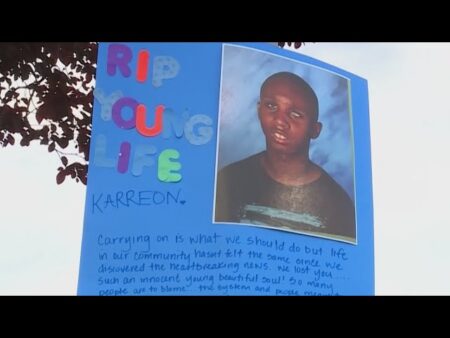 Davis Law Group secured a $49.33 million settlement from the State of Washington and the Evergreen School District for the family of Karreon Adams-Franks, a 15-year-old boy who was autistic, nonverbal, and legally blind, and who starved to death in his own home while the agencies responsible for protecting him ignored years of warnings. The settlement resolves the claims of Karreon’s estate and his two surviving brothers, who lived through the same abuse and survived it.
Karreon weighed 61 pounds at the time of his death on November 27, 2020. He depended completely on the adults in his life for survival and day-to-day guidance. The people and institutions that were supposed to be a safety net for a disabled child (i.e. his school and the state child-welfare system) had warning after warning in front of them for years and did not stop what was happening. This lawsuit was about holding them accountable for that failure.
The State of Washington, including the Department of Children, Youth, and Families (DCYF) and the Department of Social and Health Services (DSHS), and the Evergreen School District agreed to the settlement on October 8, 2026, days before trial was set to begin in Clark County Superior Court.
Karreon was adopted by his biological aunt, Felicia Adams, and her husband Jesse Franks. He and his two younger brothers lived in Vancouver, Washington, in Clark County.
Inside that home, the three boys suffered years of abuse. Food was withheld from them as punishment. They were choked and beaten with objects, including an extension cord and a cane. They were locked in their bedroom for days at a time, and at one point the inside doorknob was removed so they could not get out.
Karreon, the oldest, could not speak, could not see, and could not advocate for himself. By late November 2020 he was starving. On November 27, 2020, he died. He was 15 years old and weighed 61 pounds.
In 2023, Felicia Adams and Jesse Franks were convicted of homicide by abuse for Karreon’s death and of criminal mistreatment of his two younger brothers. Adams was sentenced to 35 years in prison and Franks to 30 years. The Washington Court of Appeals affirmed the convictions and sentences in March 2026. The criminal case punished the two people who directly caused Karreon’s death. The purpose of this civil case was to hold accountable the many agencies and individuals that had the power to intervene, but did not.
Washington’s child-welfare system existed to catch exactly this situation. DCYF received reports about Adams and Franks as early as 2017. Two separate referrals that year alleged that food was being withheld from the children as punishment, but DCYF shockingly took no action.
The warnings grew more urgent as time went on, and as Karreon’s condition deteriorated. On November 20, 2020, a relative reported to DCYF that Karreon looked like a “walking skeleton” and was falling down from malnourishment. A DCYF social worker went to the home the next day, November 21, six days before Karreon died. The worker saw him and noted that he was “very skinny,” but took no further action and did not get him medical care or remove the boys from the home.
Six days later, Karreon was dead.
Under Washington law, the state can be held responsible when a negligent child-abuse investigation leads to a decision that leaves a child in a dangerous home. The lawsuit alleged that DCYF failed to properly investigate the reports it received and failed to protect the children it was told were in danger.
All three boys attended Evergreen School District schools, including Shahala Middle School and Mountain View High School. Washington’s mandatory reporting law, RCW 26.44.030, requires school employees who have reasonable cause to believe a child has been abused or neglected to report it to law enforcement or to DCYF. The reports exist to put a trained outside set of eyes on a child in trouble.
In May 2018, one of the boys told an Evergreen school bus driver that food had been withheld from him over an entire weekend. Instead of a report to DCYF or the police, the complaint went back to the home. District staff reported the boy’s disclosure to Felicia Adams, the very person abusing him. She then beat him in retaliation for telling.
The lawsuit alleged that Evergreen School District staff documented concerns about these boys for years and that the district failed to train and supervise its employees to report what they were seeing.
When DCYF and DSHS conduct a child-abuse investigation negligently and that negligence leads to a harmful placement decision, including the decision to leave a child in an abusive home, the state can be held liable for the harm that follows. DCYF had reports going back to 2017, including a direct report that Karreon was wasting away six days before he died. Although the state sent a worker who saw a “very skinny” child, all three boys were allowed to remain in the home.
The school district also had a duty under the mandatory reporting law. School employees are mandatory reporters because they see children every day and are often the first adults positioned to notice abuse. A district that does not train and supervise its staff to recognize and report abuse (and instead routes a child’s allegations of abuse back to the abuser) fails the children it serves.
The settlement from Evergreen School District represented the entire amount of insurance coverage available to the district.
“No amount of money will ever make up for what happened to Karreon and what his brothers lived through. These boys spent years suffering abuse. When one of the boys reported the abuse to school staff, he was severely beaten by his abusers. The boys were forced to watch their older brother slowly die. The people and agencies responsible for protecting them, at school and at the State, saw the warning signs for years and did not act. We hope this settlement gives Karreon’s brothers the stability and support to build the future they deserve. We also hope it reminds every governmental agency and school district that each warning sign must be treated as if a child’s life depends on it, because it often does.”
— Chris Davis, founder and principal attorney, Davis Law Group, P.S.
The State of Washington can be held accountable when DCYF or DSHS investigates a report of child abuse negligently and a child is left in danger as a result. School districts and other institutions that employ mandatory reporters can be held accountable when they fail to train, supervise, or require their staff to report abuse. These are difficult cases. They take investigation, expert testimony, and a firm willing to take on the state and a public institution and prepare the case all the way to trial. They are also some of the most important cases a family can bring, because the accountability reaches past the individual abuser to the system that let the abuse continue.
Depending on the facts, a claim arising from a government or institutional failure to protect a child can seek compensation for:
The value of any claim depends on the facts, the strength of the evidence that the agency or institution failed in its duty, and the harm that failure caused.
If your family lost a child, or a child in your life was harmed, after a state agency or a school ignored the warning signs, Davis Law Group can help you understand whether you have a claim. These are hard cases, and the firm has the experience and the resources to take them on.
Contact us online or call (206) 727-4000 for a free, confidential consultation. We are available 24/7, and you pay no fee unless we recover for you.
Can you sue the State of Washington or DCYF when a child dies from abuse?
In some cases, yes. Washington recognizes a claim for negligent investigation against the Department of Children, Youth, and Families and the Department of Social and Health Services. When the state investigates a report of child abuse negligently and that failure leads to a harmful decision, such as leaving a child in an abusive home, the state can be held liable for the harm that results. There are strict notice requirements and deadlines for claims against the state, so it is important to talk to a lawyer quickly.
Is a school district responsible for failing to report child abuse?
It can be. Under RCW 26.44.030, school employees are mandatory reporters who must report reasonable suspicion of child abuse or neglect to law enforcement or DCYF. When a district fails to train or supervise its staff to make those reports, or when staff ignore or mishandle a child’s disclosure, the district can face liability for the harm that follows. Whether a claim exists depends on the specific facts.
Who can bring a wrongful death claim when a child is killed in Washington?
Washington’s wrongful death and survival statutes allow a child’s estate and certain family members to bring claims. The rules about who can recover and what damages are available are specific and have changed in recent years. An attorney can explain who in a particular family is entitled to bring a claim.
What is a negligent investigation claim?
It is a claim that a state child-welfare agency conducted a child-abuse investigation negligently and that the negligent investigation caused a harmful placement decision. Washington is one of the states that recognizes this kind of claim. It is a narrow and heavily litigated area of law, and these cases usually require experienced counsel and expert testimony.
How long do I have to file a claim against a government agency in Washington?
Claims against state and local government must follow special procedures, including filing a formal tort claim and waiting a set period before suing, and they are subject to deadlines that can be shorter and stricter than ordinary personal injury deadlines. Because missing a government claim deadline can end a case before it starts, families should speak with an attorney as soon as possible.
How much does it cost to hire Davis Law Group?
Davis Law Group handles these cases on a contingency fee. You pay no attorney fee unless the firm recovers for you, and the initial consultation is free.
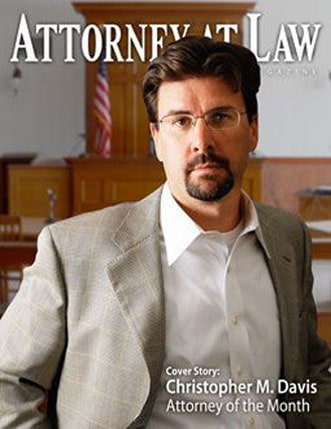
Attorney at Law Magazine featured Chris Davis on the cover of the inaugural issue of the publication’s National Edition.
read articleOffice Hours:
24 hours/day. 7 days/week.
Phone:
Contact Us
Complete this CONFIDENTIAL form or call 206-727-4000 for a FREE consultation.